
Science of Cities Symposium 2023
The Science of Cities Symposium 2023 explored urban futures through three distinct lenses. Panel 1 focused on scientific scenario planning, Panel 2 examined decarbonisation strategies, while a co-curated panel with FCL Global delved into regenerative cities.
Last updated on 21 July 2025
Thematic Panels
Held on 5 October 2023 as part of the USS R&D Congress, the Science of Cities Symposium will feature two thematic panels and one co-curated panel with Singapore-ETH Centre FCL Global:
Panel 1: Science-Based Approach to Planning Future Scenarios
In the 20th Century, cities were regarded as “machines for living” and such ideas extended to the city itself, with planning defined by comprehensive and sometimes rigid Masterplans. However, cities now have the growing ability to harness science to study the city as a system-of-systems – i.e. characterised by heterogeneity, interdependencies, and circular-causality, all of which culminate to emergent and unpredictable disruptions at various temporal and spatial scales.
On the one hand, the unpredictable dynamics of cities and their development trajectory make it impossible to plan cities in detail for the long term. On the other hand, planning remains important to provide the necessary conditions for the self-organisation of cities and its constituents to take place, while the ubiquity of big data, digital twins and computational modelling techniques present the potential to simulate future growth scenarios. Hence, when working with uncertainties, there are opportunities for researchers to adopt a systems-thinking and science-based approach to identify the key underlying drivers of the urban system and its emergent behaviours, grasp the co-evolution of different systems and create scenarios for possible futures.
This theme welcomes abstracts at the intersection of complexity science and urban foresight for better future outcomes for the liveability, sustainability and urban resilience of cities.
Panel 2: Science of Decarbonising Cities
The call for decarbonisation has intensified in the wake of the recent triple-crisis of the COVID-19 pandemic, global energy crisis, and the growing frequency and intensity of climate change events. Not only do these events expose the world to the dire consequences of fossil fuel over-reliance, poor disaster preparedness, insufficient climate mitigation and adaptation plans to enable a net-zero transition, but also the gap in the capacity of cities’ governments and corporates in adopting low-carbon practices, diverting funds in decarbonisation research and innovation, and relooking their mitigation-adaptation strategies.
To truly advance critical climate action milestones, solutions to phasing out of fossil fuels, developing clear funding frameworks and standards, and transitions are now needed to decarbonise cities within and beyond their consumption value chains are required. The ability to harness science is as equally critical as political will and mindset shifts to deliver robust and effective guidelines are necessary for green and sustainable transition.
This theme will thus put a spotlight on the role of science-based approaches in devising decarbonisation pathways across various sectors in the urban built environment. We welcome presentations that can tie scientific methods to the development of decarbonisation frameworks and policies, especially practices and pathways in the built environment sectors in cities, as well as enhancing carbon mitigation and adaptation strategies.
Co-curated Panel with FCL Global: Regenerative Cities
According to the recently released U.N. Intergovernmental Panel on Climate Change (IPCC) report on climate change, the world is likely to pass a dangerous temperature threshold within the next 10 years, pushing the planet past the point of catastrophic warming — unless nations drastically transform their economies and immediately transition away from fossil fuels. Estimates suggest that cities are responsible for 75% of global CO2 emissions, with transport and buildings being among the largest contributors.
This is an urgent call for urban planners, policymakers, and researchers to take action and affect transformational change to shrink the urban environmental footprint, as the settlement footprints expand, the interconnections between them become even more complex. We require a sustainable and regenerative approach, creating a restorative relationship between cities and the context they are situated within. This session presents six such regenerative strategies.
Posters
Find the full list of posters here
P3: Urban Modelling for Singapore’s Weather and Climate (opens in new tab)
P5: Non-asset-based Risk Models for Quantifying Future Climate Risk in Cities (opens in new tab)
P12: Self-Organised Criticality in a Model of Supply Chain Network (opens in new tab)
P14: Pedestrian Movement Distribution Patterns in Multilevel Urban Environments (opens in new tab)
P16: Mapping Urban Green Space Networks with Visual Analysis (opens in new tab)
P20: Understanding Active Mobility using Computer Vision and Data Visualisation (opens in new tab)
P25: Material Stock-service and Circularity Prospects of Buildings in Singapore (opens in new tab)
P30: Adaptability of Buildings for Sustainable Built Environment: A Review (opens in new tab)
Important Dates to Note
Milestone deadlines
Milestone | Date |
Submission deadline for proposals | 9 June 2023 |
Notification of acceptance/rejection | 7 July 2023 |
Deadline for speakers’ acceptance | 21 July 2023 |
Submission deadline for presentation materials | September, to be updated |
Science of Cities Symposium | 5 October 2023 |
Programme & Presentation Format
Science of Cities Symposium @ USS R&D Congress
5 October 2023, Thursday, Singapore
Time | Duration | Programme |
Theme 1: Science-Based Approach to Planning Future Scenarios | ||
9am - 11am | 10 mins | Opening Remarks for SoC Symposium by Ms Adele Tan (Acting Deputy Chief Executive Officer and Chief Planner, Urban Redevelopment Authority Singapore) |
1h 50 mins | Keynote address [2 x 15 mins]
Presentation by academics, practitioners [5 x 10 mins]
Panel discussion (moderated) [30 mins] | |
11am -11.30am | 30 mins | Networking Break |
Theme 2: Science of Decarbonising Cities | ||
11.30am – 1.20pm | 1h 50 mins | Keynote address [2 x 15 mins]
Presentation by academics, practitioners [5 x 10 mins]
Panel discussion (moderated) [30 mins] |
1.20pm - 2.30pm | 1h 10 mins | Network Break cum Lunch |
Theme 3: Regenerative Cities | ||
2.30pm – 4.30pm | 2h | Welcome address by Professor Sacha MENZ Opening address by Professor Thomas SCHROEPFER Presentation by academics, practitioners [6 x 10 mins]
Moderated Panel Discussion [15 min]
Moderated Panel Discussion [15 min] |
4.30pm – 5.30pm | 1h | Networking Reception and Research Poster Presentations |
Following the review of submitted abstracts, selected abstracts will be featured as oral presentation at the panel sessions and/or poster presentation at the on-site exhibition area.
For the oral presentation, each panel session will feature four selected projects. Researchers of the selected abstracts shall prepare a 10-minutes presentation of the project and participate in a moderated panel discussion for the Science of Cities Symposium. The researcher must attend the Symposium in-person.
For the poster format, researchers of the selected abstracts shall prepare an A0 digital poster for display at the on-site and/or virtual poster exhibition. The poster presenters are encouraged to attend the Symposium in-person.
Researchers will also have the opportunity to publish the selected project as a paper in the International Journal on Smart and Sustainable Cities (opens in new tab), co-published by World Scientific Publishing Company and CLC.
Videos
Science of Cities Symposium 2023 Panel 1: Science-based approach to future scenario planning
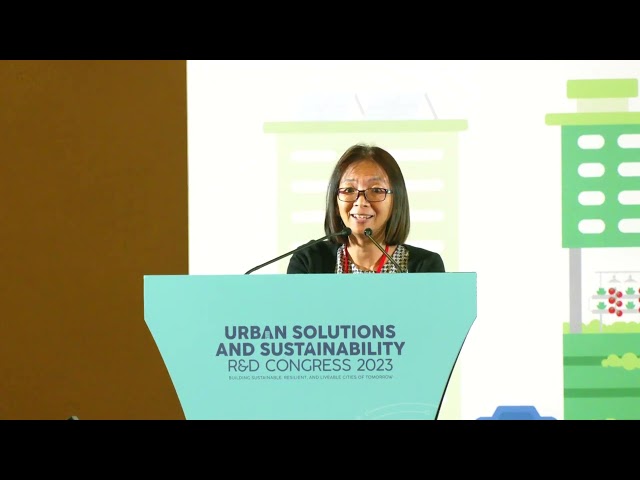
Science of Cities Symposium 2023 Panel 2: Science of Decarbonising Cities

Science of Cities Symposium 2023 Panel 3: Regenerative Cities Part 1

Science of Cities Symposium 2023 Panel 3: Regenerative Cities Part 2
